

DONDA
On Kanye West, Pt. XI

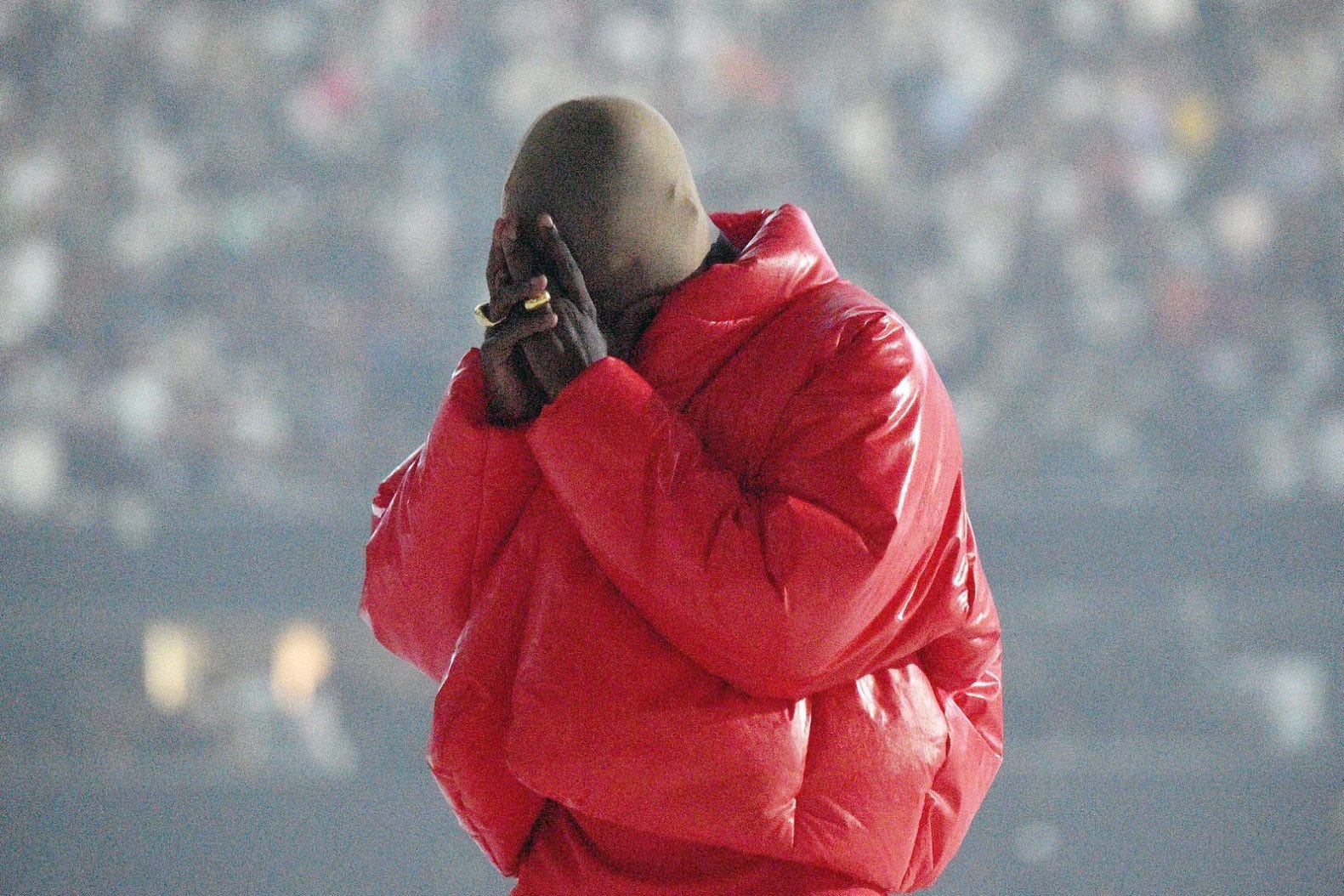
After Kanye’s presidential bid failed, he distanced himself from politics. Two months after Biden won the election, Kim Kardashian filed for divorce. Kim would later say she had tired of acting as Kanye’s ‘clean up crew’. She felt Kanye had changed, too. ‘It’s the hardest feeling to watch someone you really loved and have a family with,’ she said, ‘just be so different from who you knew.’1
An immense narcissistic wound, the divorce weighed heavily on Kanye’s psyche. Erratic and aggravated posts appeared rapidly on his social media. For his audience of millions, Kanye alternately expressed anguish at the collapse of his marriage and savagely bullied Kim’s new partner, comedian Pete Davidson, apparently hastening the collapse of Kim’s new relationship.2 Deploying a form of harassment accessible only to the rich, he also bought a house across the street from Kim. Kanye, it seems, absolutely refused to move on from this woman he would later describe as a ‘foster mom’. That he said his new partner, Bianca Censori, a woman who closely resembles Kim, was a ‘bitch looking like a reference’ only strengthens such suspicions.3
Kanye’s displays of outrage, self-pity, misery and misogyny soon coalesced into his next creative project—the two albums he named after his late mother, Donda and Donda 2. Originally, Kanye planned to launch the record with a listening party at Atlanta’s Mercedes Benz Stadium on July 22nd. The event, however, was a failure. The record was stillborn: the songs were not nearly finished; the mixes were muddy; the vision, unclear. Kanye answered the miscarriage of the event by turning the rest of the recording sessions into a strange, ascetic piece of performance art: he and his collaborators camped out in a locker room of the stadium for weeks as they worked to complete the album.
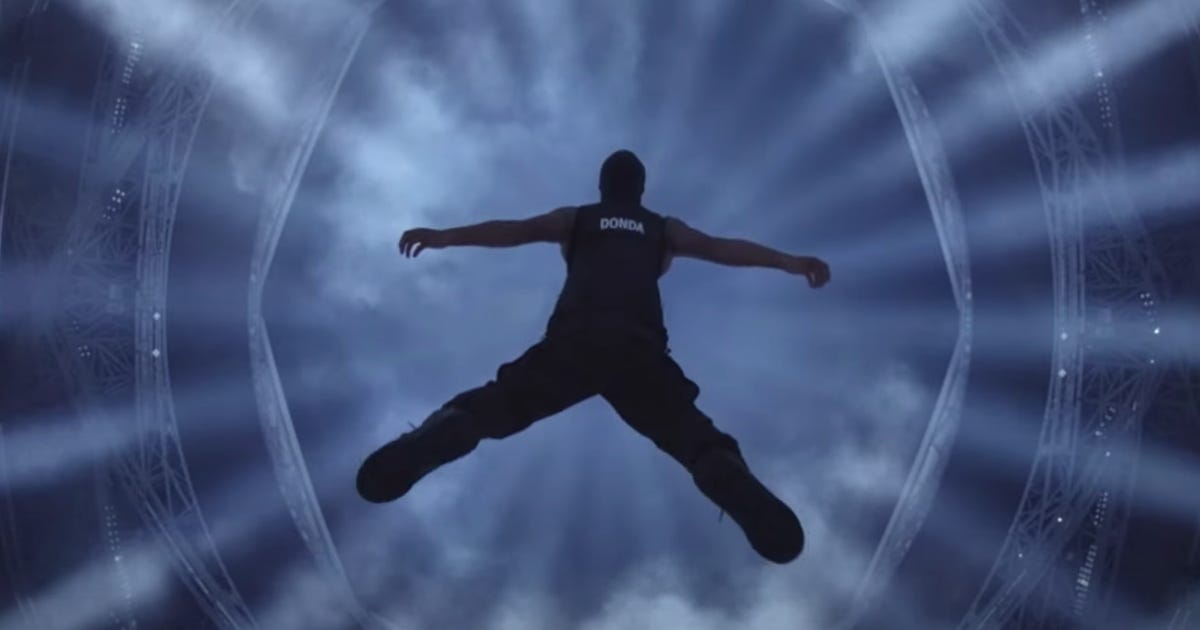
A second listening event followed. The album still unfinished, Kanye ascended into a lightbeam after the final song as if his body was rising to heaven.
After more recording sessions, Kanye staged a third listening party. A lifesize replica of his childhood home loomed onstage as the music played. West stood nearby, accompanied by Marilyn Manson and Da Baby, respectively an alleged rapist and a vocal homophobe. Dressed in a spectral bridal gown, Kim Kardashian strode across the ground like an intrusive ghost, a reminder of Kanye’s lost maternal figures. Later in the event, a red glow consumed the house as Kanye was lit on fire, the man flailing as his body burned. The album—again, not yet finished—was released the next day, apparently without Kanye’s permission, who continued to work on it afterwards, inevitably leaving parts of it in an incomplete state.
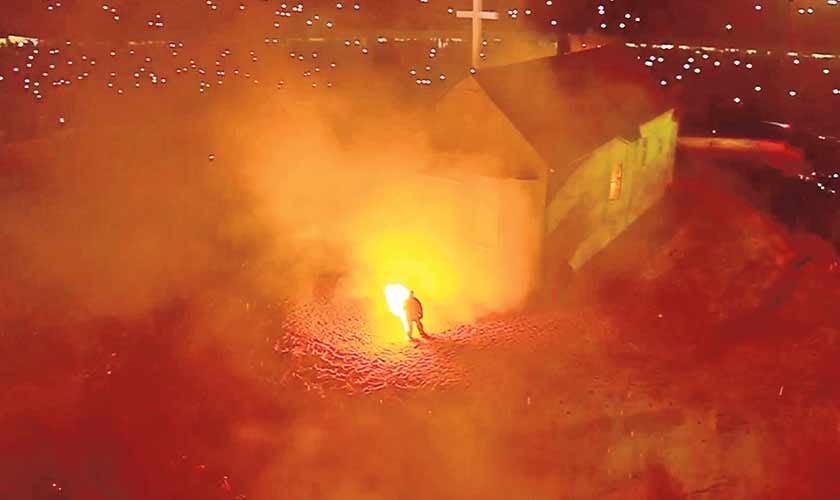
Six months later, West held a final listening party in Miami for Donda 2, the sequel to the first album. Even less finished than the first record, West’s mumbled reference tracks and unintelligible lyrics echoed out across the giant stadium where the replica of Kanye’s childhood home burned once again. The incomplete album was then released on a bespoke device, with Kanye claiming he would finish the album later. Within months, though, the updates had ceased; Kanye had apparently abandoned the project.
On his Donda records and their launch events, it seemed that Kanye was trying to reckon with unspeakable loss. As he repeatedly staged his death and ascension at the launch events, released then retracted his records, and summoned and destroyed relics from his past, it appeared as if Kanye was in what psychoanalysts call the ‘work of mourning’. To transcend his grief, to become someone less burdened by loss, he was recalling, reconsidering and refashioning the symbols from his history—his mother, his childhood, his ex-wife. He even changed his name, cleaving off its every syllable except for Ye.
Yet, as Sigmund Freud suggests in 1917’s ‘Mourning and Melancholia,’ the work of mourning can fail. If we identify too strongly with those we have lost, or if we hold feelings towards them that we cannot admit to consciousness—hatred, guilt, shame or even joy at their death—then mourning can be halted, and we can fall into a melancholic depression where our negativity towards the other becomes suicidal violence aimed inwards at ourselves. Though Kanye’s words are gathered here beneath the name of his beloved mother, most of them feel curiously empty and insubstantial. On these records, Kanye says little of emotional significance; he rarely mentions his mother; there are passages, too, where he mumbles unintelligibly over the beats, as if he were compelled to speak but had no words to say. The depth of feeling one would expect from a man riven by loss on these albums dedicated to his late mother is absent. The albums and their launch events suggest Kanye was still unable to speak wholly about his losses but could not speak about anything else either. That Donda 2 was an even emptier echo of the first record beholds Kanye’s muted need to speak, his twin desire to communicate and to empty his words of meaning. Rather than confronting his history to lay it to rest, it seemed as if Kanye was rapping to keep it alive—not mourning, but admitting and denying his loss.
The sole exception to this is a 90 second passage of the song ‘Jesus Lord’. When his mother lost her life, Kanye raps, ‘it took the life out the party.’ And though he ‘promised never to let the reaper in,’ Kanye admits that he has been having suicidal thoughts and abusing drugs, outrunning them only by ‘reaching for the stars’ and striving to meet his potential. ‘If I die tonight,’ he asks, ‘will I see her in the afterlife?’ Against the album’s shallowness elsewhere, this frankness is startling. But perhaps inevitably, Kanye rapidly abandons such thoughts and turns ‘back to reality.’ For the rest of the track, Donda is never mentioned again, and Kanye’s suicidal ideation is addressed only by the chorus line: ‘Tell me someone that needs, Jesus, Lord.’
When Kanye abandoned his unfinished Donda records, all these thoughts and feelings he could have addressed with his music and events remained alive. The work of mourning was incomplete; he avoided any meaningful engagement with his grief; suicidality, narcissism, misogyny and guilt continued to swirl within his mind. Kanye still identified with the persecuted and demonised—Marilyn Manson and Da Baby. He replaced Kim Kardashian, a ghostly presence at his launch events, with Bianca Censori, a ‘bitch’ who looked like a ‘reference’ as he would rap on Vultures I. And he still saw himself as someone who struggled ‘to be an angel’ because he was ‘surrounded by demons.’4
Beset by these powerful psychic forces, Kanye would soon find a group onto whom he could project his ungovernable negativity, the dark side of the ambivalence he could no longer bear: the Jews.
Footnotes
https://www.standard.co.uk/showbiz/kim-kardashian-reveals-what-caused-kanye-west-divorce-the-kardashians-clean-up-crew-b1084822.html
https://www.cosmopolitan.com/uk/entertainment/a44597712/kim-kardashian-regrets-dating-pete-davidson/
See the lyrics to ‘PROBLEMATIC’ from Vultures I.
See the lyrics to ‘Jesus Lord’ from Donda.